Electrostatic discharge (ESD) damage remains one of the most insidious threats in electronics manufacturing. A single discharge—often imperceptible to operators—can degrade semiconductor junctions, corrupt firmware, or introduce latent defects that surface only after field deployment. For procurement and quality teams, selecting the right ESD packaging is not just about compliance; it’s about protecting yield, reducing field failures, and avoiding costly rework. This guide outlines the fundamentals of ESD packaging, from material properties to procurement best practices.
Understanding ESD Damage and Failure Modes
ESD occurs when two objects with different electrostatic potentials come into contact or close proximity. In electronics manufacturing, charge build-up typically happens during handling, transit, or storage. The resulting discharge can cause two types of damage:
- Catastrophic failure: Immediate and irreversible damage, such as dielectric breakdown or metal vaporization, rendering the component non-functional.
- Latent failure: Partial degradation that weakens the component, leading to reduced performance or premature failure in the field. Latent defects are particularly problematic because they are difficult to detect during standard testing.
For example, a semiconductor exposed to a 100V discharge may pass initial functional tests but fail after weeks or months of operation. This unpredictability makes ESD protection a critical consideration in packaging design.
ESD Packaging Material Families
ESD-safe packaging materials are categorized based on their surface resistivity, which determines how effectively they control electrostatic discharge. The three primary families are:
1. Conductive Materials
- Surface resistivity: Less than 1 × 10⁴ Ω/sq.
- Examples: Black conductive bags, conductive foam, carbon-loaded trays.
- Use case: High-risk environments where rapid charge dissipation is required, such as handling Class 0 devices (sensitive to <50V discharges).
- Limitations: Can cause rapid discharge if not properly grounded, potentially damaging sensitive components.
2. Dissipative Materials
- Surface resistivity: 1 × 10⁴ to 1 × 10¹¹ Ω/sq.
- Examples: Pink poly bags, dissipative trays, anti-static foam.
- Use case: Most common for general ESD protection, balancing charge dissipation with safety for sensitive components.
- Limitations: Performance can degrade in low-humidity environments (below 30% RH), where dissipative properties may weaken.
3. Shielding Materials
- Surface resistivity: Varies, but typically includes a metallized layer to create a Faraday cage effect.
- Examples: Silver or grey metallized bags, shielding pouches.
- Use case: Protection for Class 0 devices or components highly sensitive to electromagnetic interference (EMI).
- Limitations: Higher cost and limited reusability compared to dissipative materials.
Key Standards for ESD Packaging
Compliance with industry standards ensures that ESD packaging meets minimum performance requirements. The most relevant standards include:
- ANSI/ESD S20.20: Provides requirements for establishing, implementing, and maintaining an ESD control program, including packaging specifications.
- IEC 61340-5-1: International standard for ESD protection, covering packaging materials, testing methods, and compliance criteria.
- IPC-1601: Guidelines for handling and packaging moisture-sensitive devices, including ESD considerations for PCBs and semiconductors.
Adhering to these standards helps manufacturers avoid common pitfalls, such as using non-compliant materials or failing to validate packaging performance over time.
Choosing the Right Packaging Format
The choice between trays, bags, foam, or custom-molded inserts depends on the component’s sensitivity, handling requirements, and transit conditions. Below are common use cases for each format:
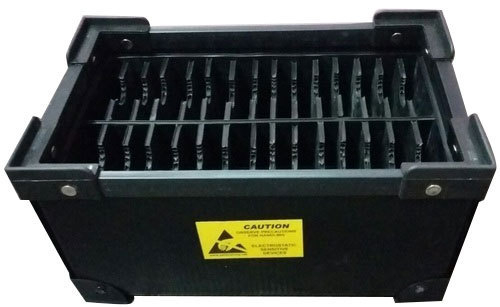
- Trays: Ideal for automated handling lines, where components need to be securely positioned for pick-and-place operations. Dissipative or conductive trays are often used for PCBs, semiconductors, and sensor modules.
- Bags: Best for individual component protection during storage or transit. Pink poly bags are widely used for general ESD protection, while metallized bags are reserved for high-sensitivity components.
- Foam: Used for cushioning and shock absorption, particularly for delicate components like bare dies or MEMS devices. Conductive or dissipative foam can be cut to size for custom applications.
- Custom-molded inserts: Designed for high-value or irregularly shaped components, such as automotive ECUs or industrial sensors. These inserts provide precise fit and protection but come at a higher cost.
Reusability and Performance Degradation
ESD packaging materials degrade over time due to wear, contamination, or environmental exposure. Surface resistivity can drift outside the acceptable range, compromising protection. Key considerations include:
- Reuse cycles: Most dissipative materials (e.g., pink poly bags) are rated for 5–10 reuse cycles, while conductive materials may degrade faster due to carbon loading.
- Incoming inspection: Procurement teams should implement a testing protocol to verify surface resistivity upon receipt and periodically during use. A simple surface resistivity meter can identify materials that no longer meet specifications.
- Retirement criteria: Packaging should be retired when surface resistivity falls outside the specified range or when physical damage (e.g., tears, punctures) is observed.
Common Procurement Mistakes
Even experienced procurement teams can overlook critical details when specifying ESD packaging. Common mistakes include:
- Confusing color with property: Pink poly bags are not inherently dissipative; their performance depends on the additive used. Always verify surface resistivity, not just color.
- Skipping incoming inspection: Assuming supplier compliance without testing can lead to non-conforming materials entering the production line.
- Mixing ESD and non-ESD packaging: Storing or transporting ESD-sensitive components alongside non-ESD materials (e.g., standard cardboard boxes) can introduce contamination or charge build-up.
- Ignoring humidity effects: Dissipative materials lose effectiveness in low-humidity environments. In dry climates or during winter months, additional measures (e.g., humidity control) may be necessary.
Comparison of ESD Packaging Materials
| Material Type | Surface Resistivity (Ω/sq) | Typical Use | Cost Index (1=Lowest) | Reusability |
|---|---|---|---|---|
| Conductive (e.g., black bags, carbon foam) | < 1 × 10⁴ | High-risk components, Class 0 devices | 3 | Low (3–5 cycles) |
| Dissipative (e.g., pink poly bags, trays) | 1 × 10⁴ to 1 × 10¹¹ | General ESD protection, PCBs, semiconductors | 1 | Medium (5–10 cycles) |
| Shielding (e.g., metallized bags) | Varies (Faraday cage effect) | Class 0 devices, EMI-sensitive components | 5 | Low (1–3 cycles) |
| Custom-molded inserts | 1 × 10⁴ to 1 × 10¹¹ | High-value or irregularly shaped components | 4 | High (10+ cycles, if undamaged) |
Selecting the right ESD packaging requires a balance of technical specifications, cost, and operational practicality. For procurement and quality teams, understanding these fundamentals is the first step toward reducing ESD-related defects and improving overall product reliability. To discuss your specific packaging requirements—whether for PCBs, semiconductors, or sensor modules—contact Xpertpack for a consultation tailored to your manufacturing environment.